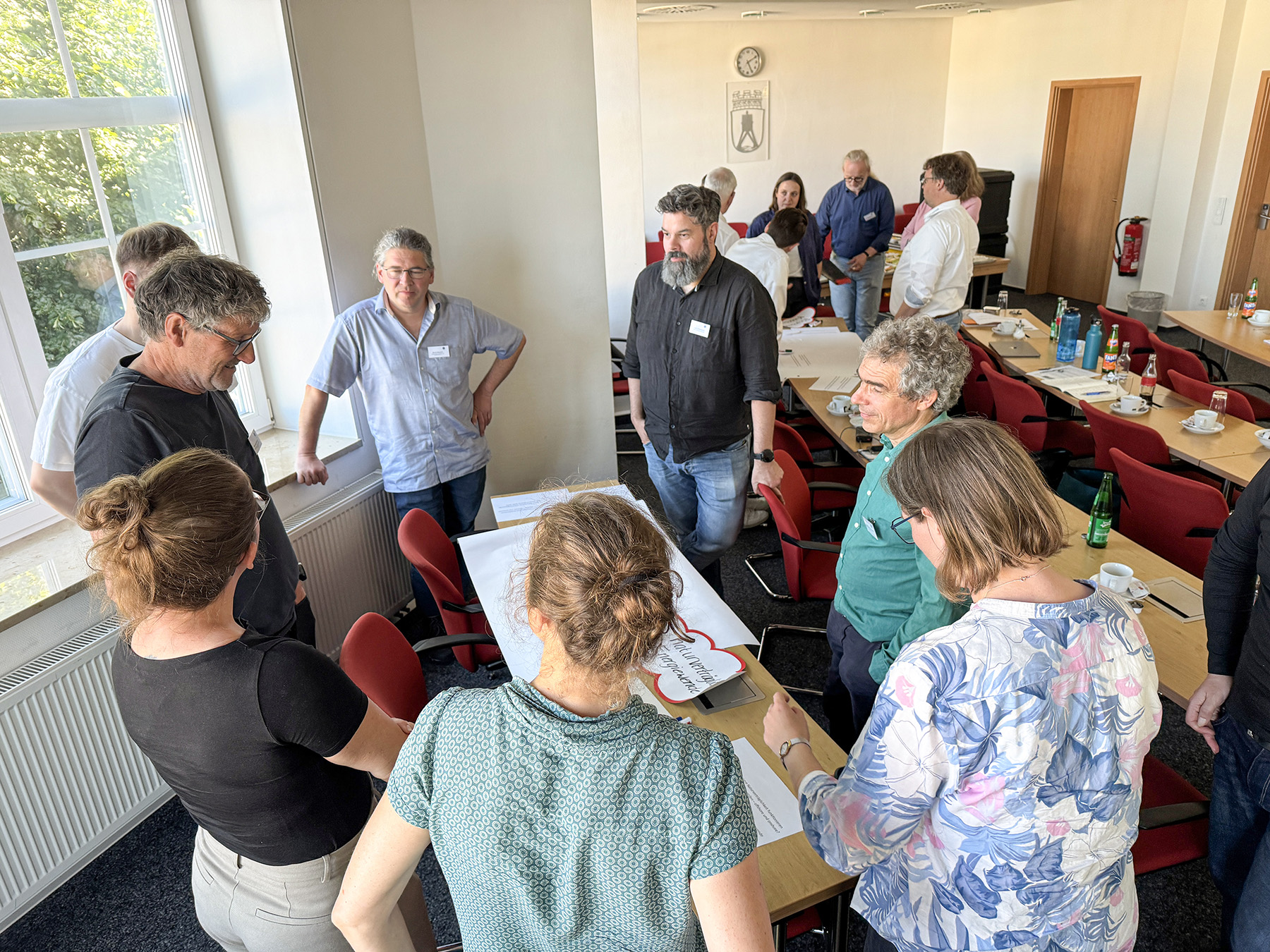

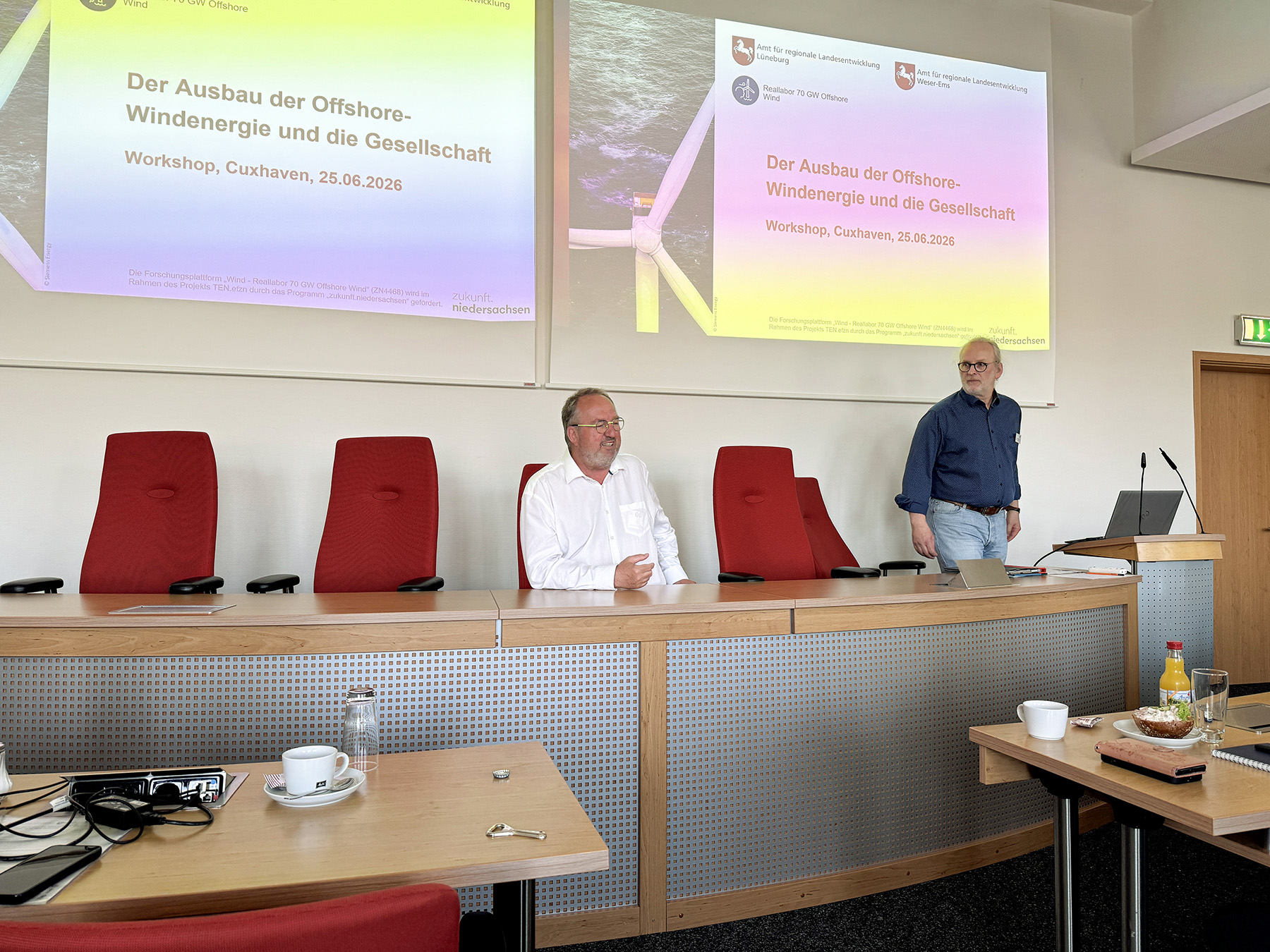
At the invitation of the two regional development offices in Lüneburg and Weser-Ems and the Living Lab 70GW Offshore Wind, on June 25,2026, approximately 30 experts from the districts and municipalities of the coastal region, the agencies, companies, environmental protection organizations, and citizens’ initiatives, as well as from the academic community, gathered in Cuxhaven to discuss the expansion of offshore wind energy and its societal challenges.
To get us in the mood, we took a factory tour in the morning at the local Siemens Gamesa Renewable Energy plant. With 1,500 employees, Siemens Gamesa manufactures turbines for offshore wind turbines in Cuxhaven. These turbines are the size of a multi-story single-family home. The absolute highlight of the factory tour was, accordingly, the opportunity to see the inside of one of these turbines.
The subsequent workshop focused on interim results from two subprojects of the living lab and from a project by the living lab project partner, the Helmholtz Center Hereon.
Klaus-Peter Buss of the Göttingen Institute for Sociological Research (SOFI) gave a presentation on the social prerequisites for offshore expansion and discussed two key obstacles to achieving the expansion goals: the necessary expansion of ports and the increasingly evident shortage of skilled workers.
Andreas Kannen and Jürgen Schaper (both from Helmholtz Hereon) presented their research on the development of the fishing industry and discussed what lessons could be drawn for regional development.
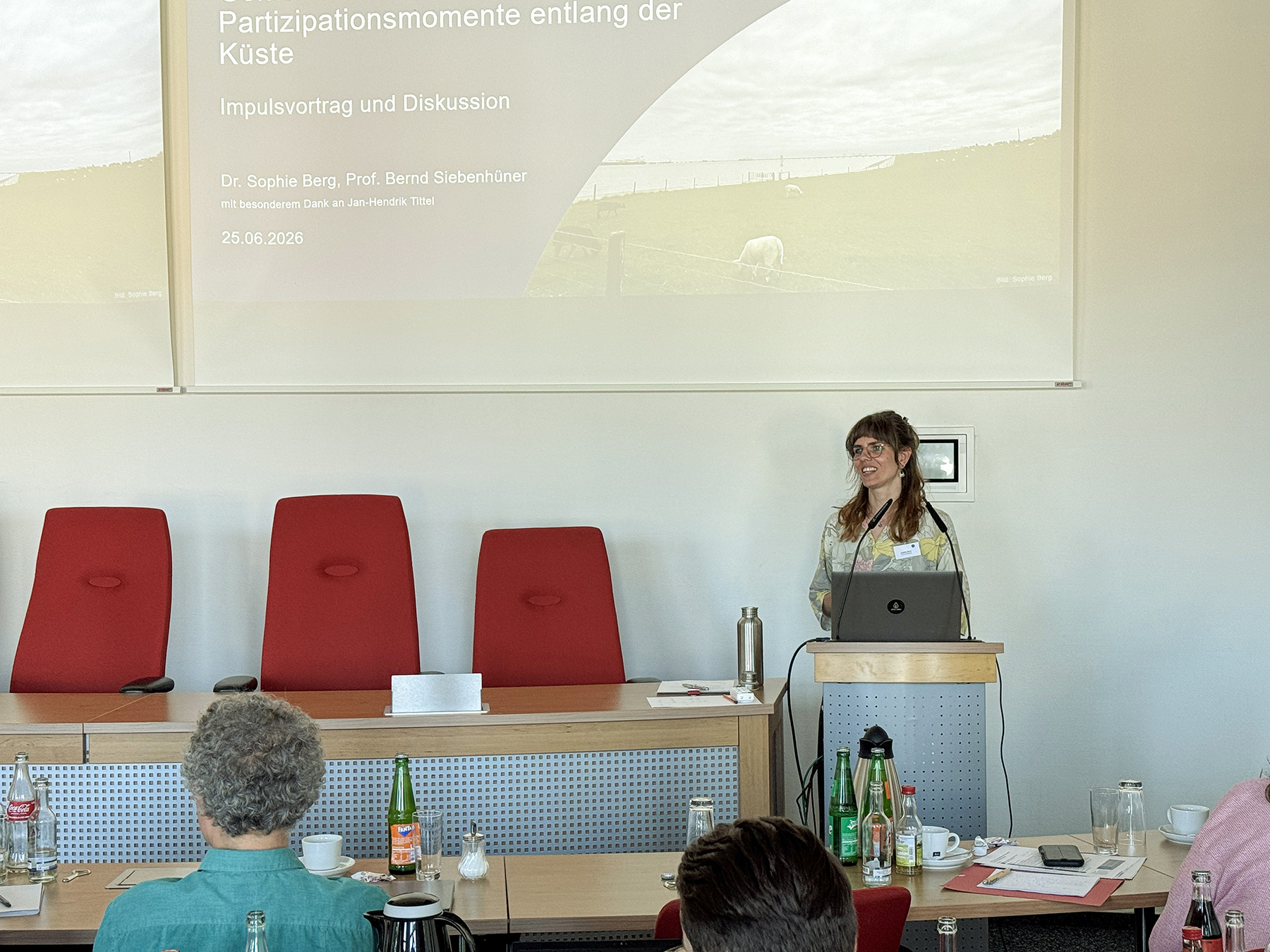
In conclusion, Sophie Berg and Bernd Siebenhüner from Carl von Ossietzky University of Oldenburg asked how the burdens and benefits of offshore expansion are perceived by stakeholders and those affected, how these burdens can be distributed more fairly, and what role participatory processes can play in this regard. In a concluding World Café session, the workshop participants discussed issues of regional coordination, opportunities for involvement and participation, and ways to ensure that offshore expansion is environmentally sustainable.
The questions and comments regarding the presentations and the work at the World Café stations yielded numerous suggestions and ideas that the researchers will incorporate into the future work of the living lab and that will also provide new impetus for the entire TEN.efzn research program. Additional workshops on the topics of decommissioning and the supply of skilled workers are being planned.
Thank you to Siemens Gamesa for a very interesting and informative plant tour, and to all the participants for their constructive feedback and many valuable insights.
Photo credits: Siemens Gamesa Renewable Energy, Apirami Logasingam (main photo), ForWind – Center for Wind Energy Research (remaining photos)
Workshop_Cuxhaven_IB1_1
Workshop_Cuxhaven_IB1_2