Measurement campaigns in the Living Lab 70GW Offshore Wind
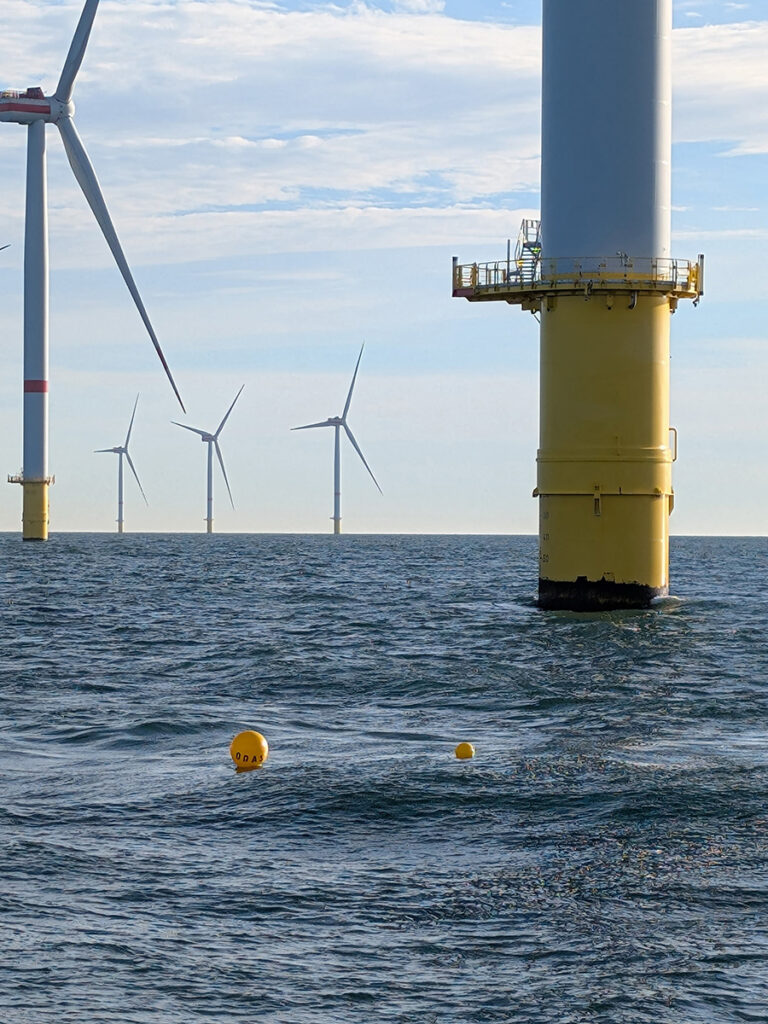
In the Living Lab 70GW Offshore Wind, an unprecedented data set is being collected for the first time within an offshore wind farm cluster of the industrial partner RWE. The data coming from multiple sources simultaneously captures conditions ranging from the atmosphere to the stratification of the water column, from wind physics to hydrodynamics, and their impact on turbine behaviour. To this end, research aircraft, research vessels, measuring boats, drifters and stationary measuring equipment on the seabed as well as lidar systems and sensors on the turbines themselves will be deployed in coordinated measurement campaigns over several years. This globally unique multi-platform strategy, coordinated by seven research institutes and in close cooperation with industry partner RWE Offshore Wind, provides the scientific foundation for the planned further expansion of offshore wind energy in the German Bight.
Ongoing measurement campaigns
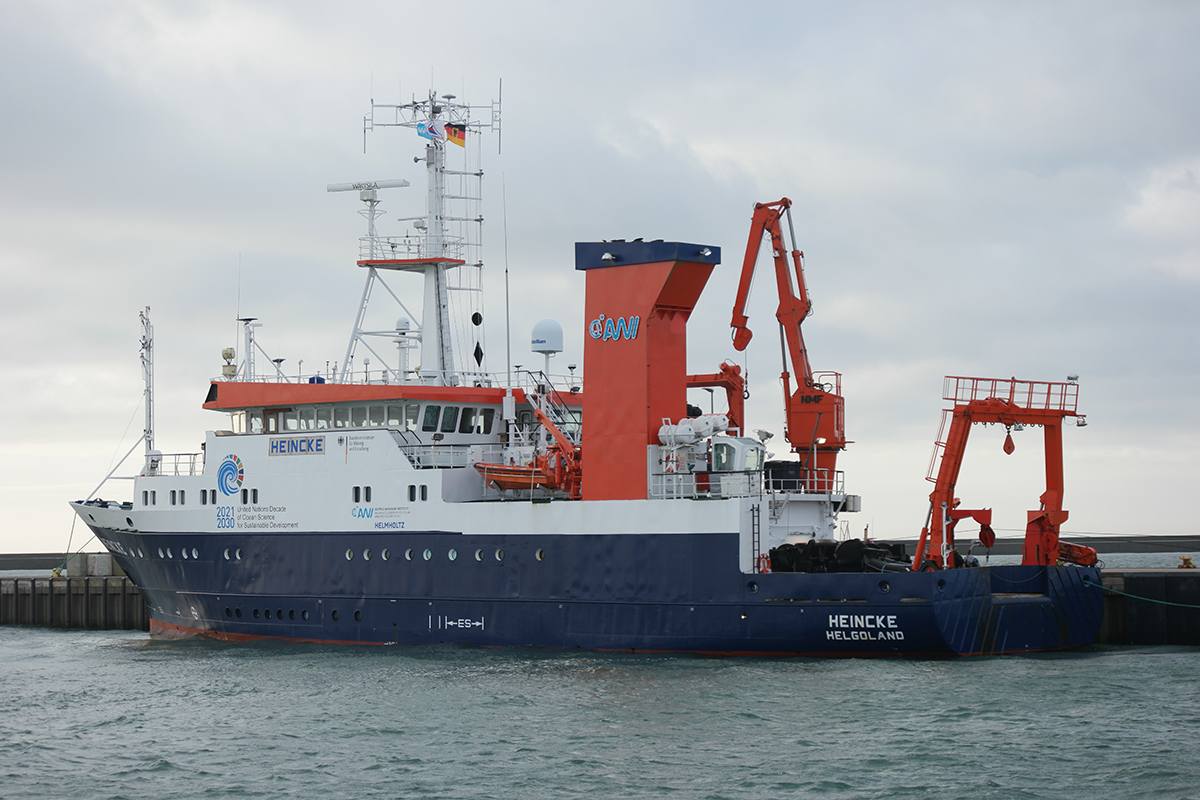
Measurement campaigns in offshore wind farms with the Heincke research vessel
As part of the Living Lab measurement campaigns, the 55-metre-long research vessel FS Heincke sails to the wind farm cluster under investigation and its surroundings for two weeks at a time over several years – always at different times of the year to record seasonal differences. Scientists from the Institute for Chemistry and Biology of the Marine Environment (ICBM, University of Oldenburg) and the Ludwig-Franzius-Institute (LuFI, ForWind – University of Hanover) work together on board.
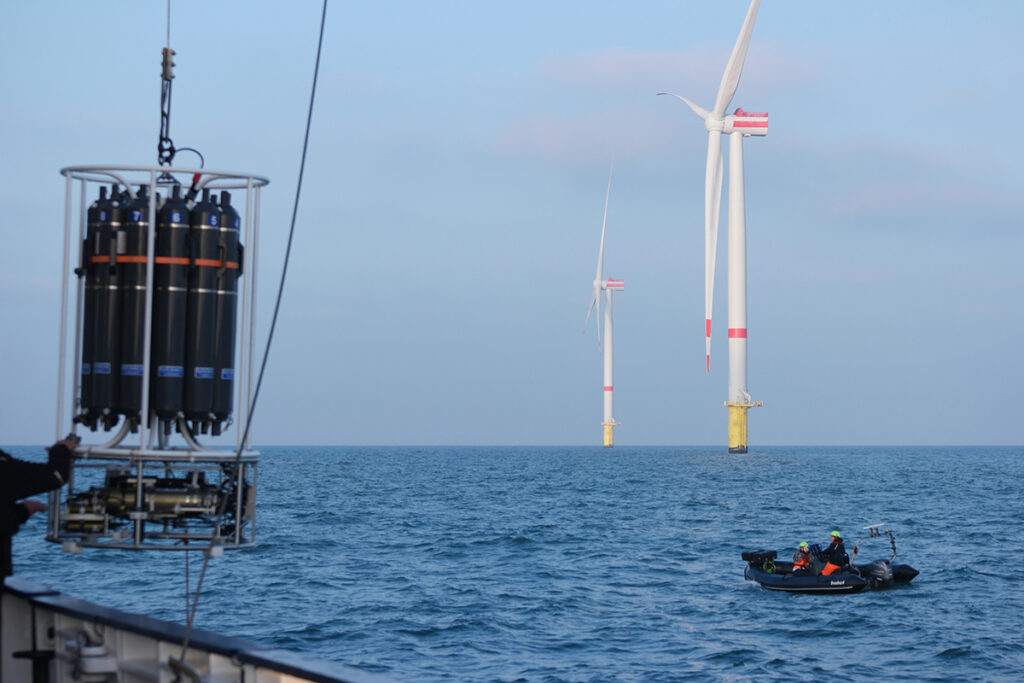
Using the Heincke, the scientists systematically scan measurement transects inside and outside the wind farm – in the near field directly between the turbines and in the far field in the wider surroundings. They continuously measure the relevant parameters in the water: current velocities and current directions in the entire water column (via ADCP), water temperature, salinity and density stratification (via towed CTD probe), turbidity and suspended matter concentration as well as light conditions under water (via BOP light field profiler). A permanently installed Ferrybox also continuously records surface water parameters.
Measurements in the near and far field
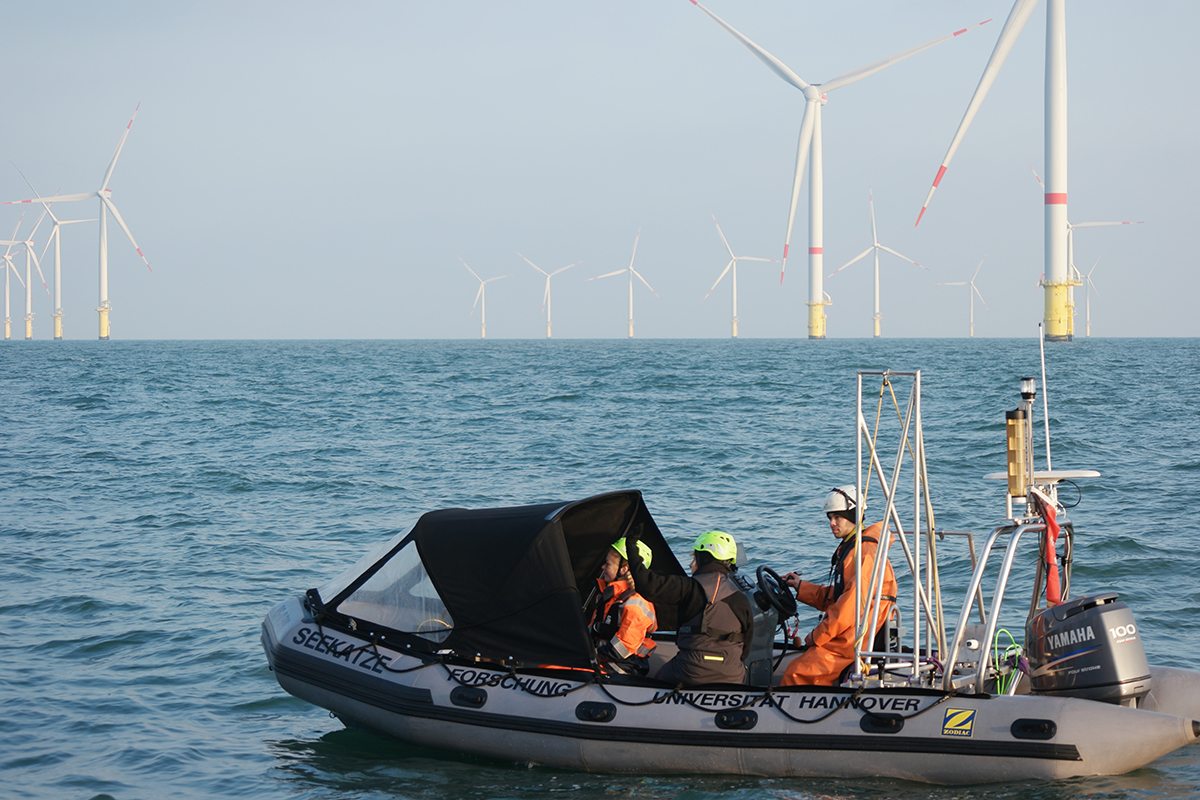
For measurements that a large ship cannot perform, two specialized inflatable boats (Rigid-Hulled Inflatable Boat) are used, which have been equipped with offshore-ready sensors to measure the water column. The inflatable boats are carried on the Heincke and launched in suitable weather conditions. They can sail much closer to the wind turbines, while still keeping a safe distance, and measure where the Heincke cannot reach: directly in the current shadow of individual turbine foundations.
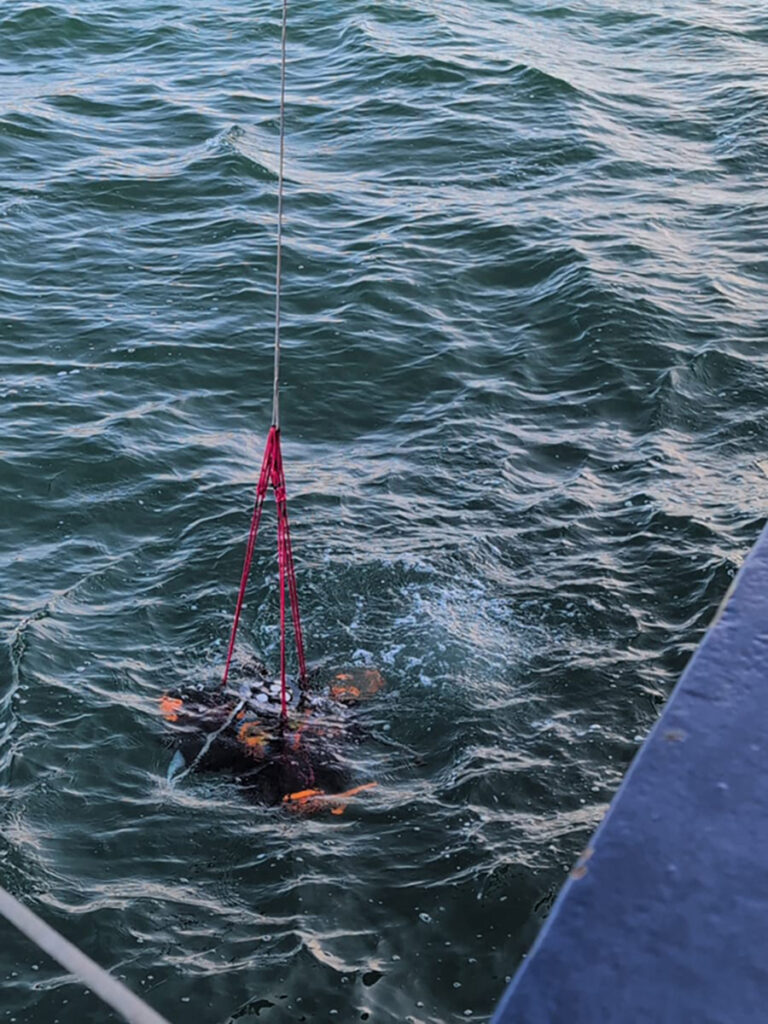
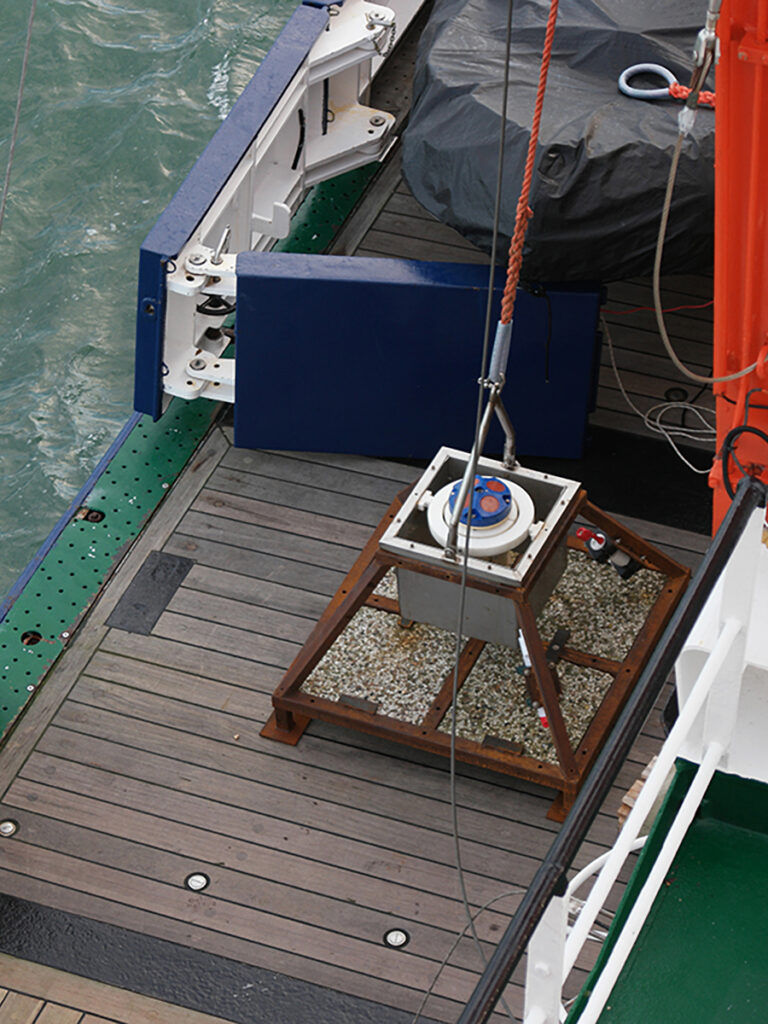
Special measurement techniques such as side-scan sonar and sub-bottom profilers enable scans of the seabed to visualize changes in the bottom structure and scour formation around the foundations. At the same time, the inflatable boats deploy sensors to the seabed and record high-resolution current and sediment profiles. At two locations in the wind farm cluster, currents, waves, sound development, temperature and salinity will be permanently recorded for around two years in order to close the time gaps between the ship campaigns.
Since 2026, long-term measurements of underwater noise in wind farms have also been carried out using special sensors on the seabed.
Measurements from the air
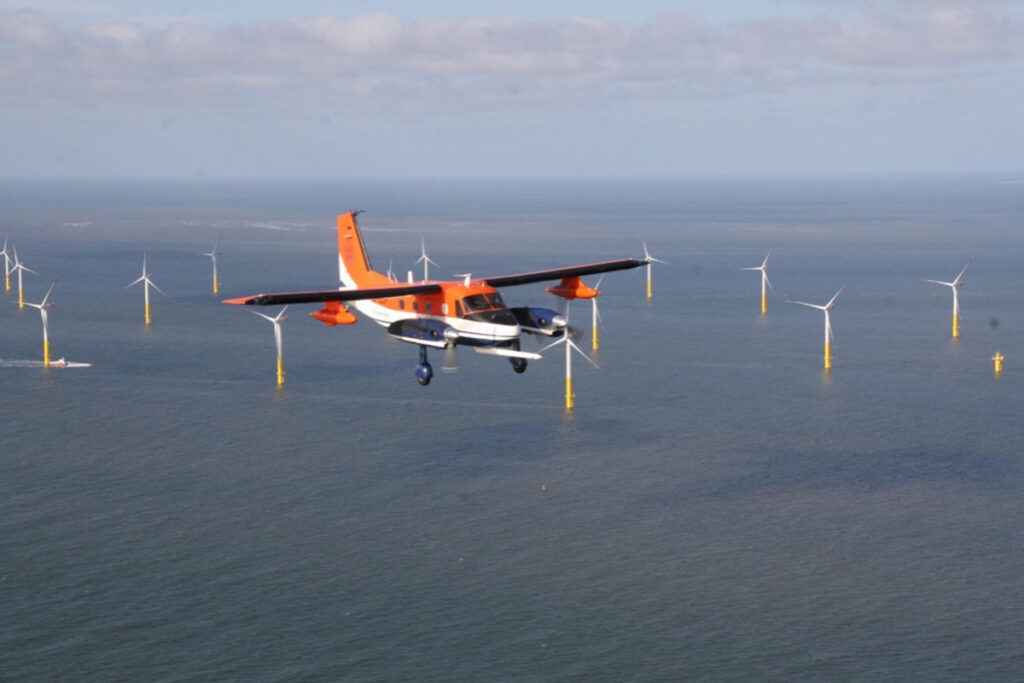
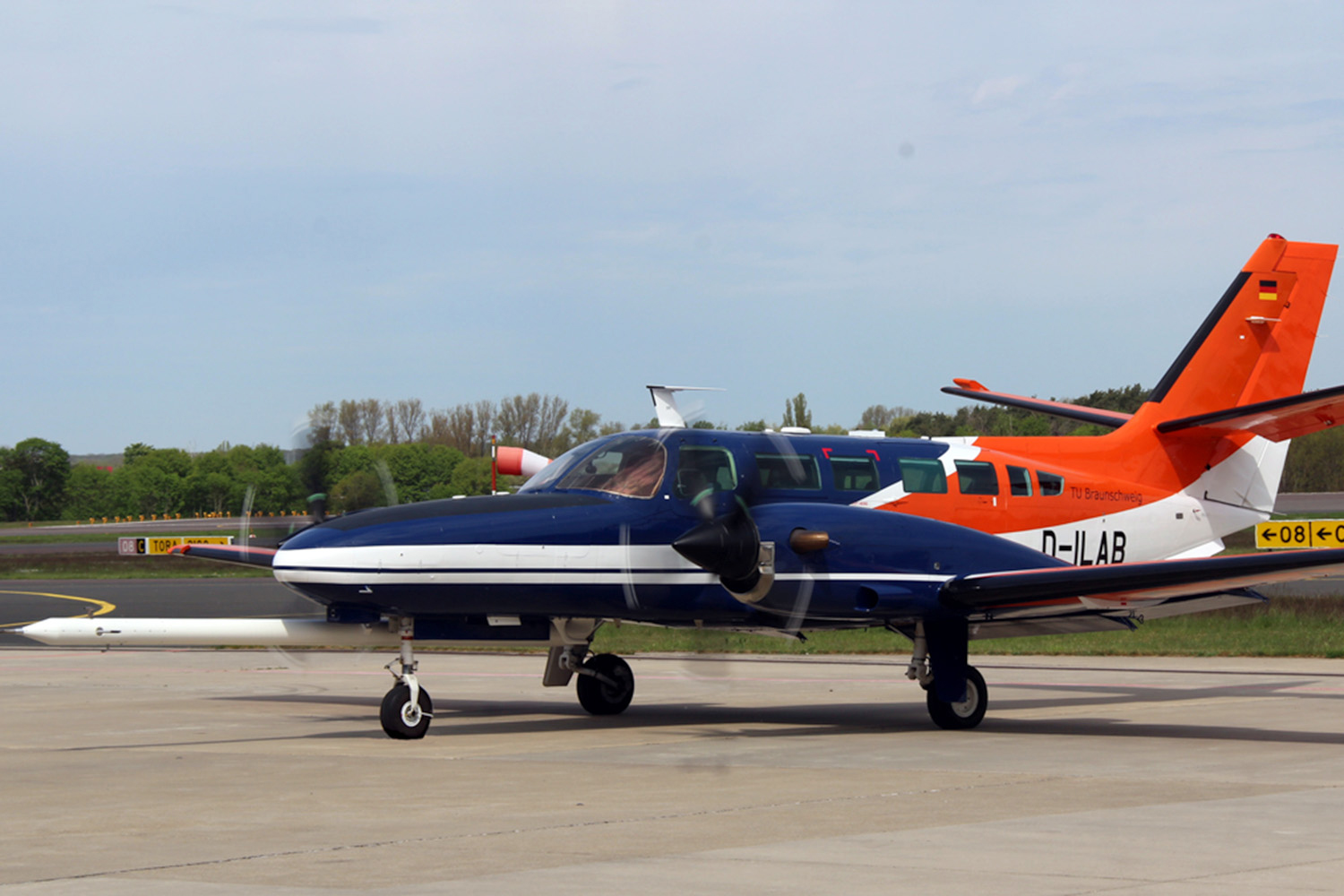
The TU Braunschweig (Institute of Flight Guidance) uses its research aircraft – a specially converted Cessna F406 – to determine the atmospheric conditions in the vicinity of the wind farm cluster. A 5-hole probe on the nose mast of the aircraft measures the three-dimensional wind vector, i.e. the wind speed in all three spatial directions. At the same time, specially developed sensors record temperature, humidity, air pressure and radiation. A high-resolution camera documents the flights visually. High-quality inertial sensors and satellite navigation determine the exact position and flight altitude so that the meteorological measurements can be precisely assigned to a location. This means that aircraft measurements can always be carried out in the areas where the measurements of the research vessels and stationary measurement technology take place. In addition, complex wind fields can be measured and displayed with the aid of a Doppler lidar.
The aircraft flies at different altitudes over the wind farm cluster and its surroundings. This creates a spatial image of the atmospheric conditions over an area of several hundred square kilometers – an area coverage that cannot be achieved by ship or with stationary sensors.
This means that potential interactions from the atmosphere to the seabed can be observed directly for the first time: From the wind field in the wind farm (measured by the aircraft and lidar systems), to waves and currents (measured by ship, boat and moorings), to sediment and seabed structure (measured by the “Seekatze”). This continuous vertical measurement chain is one of the scientific centerpieces of the living lab.
Stationary measurement technology
Lidar systems: The wind field in view
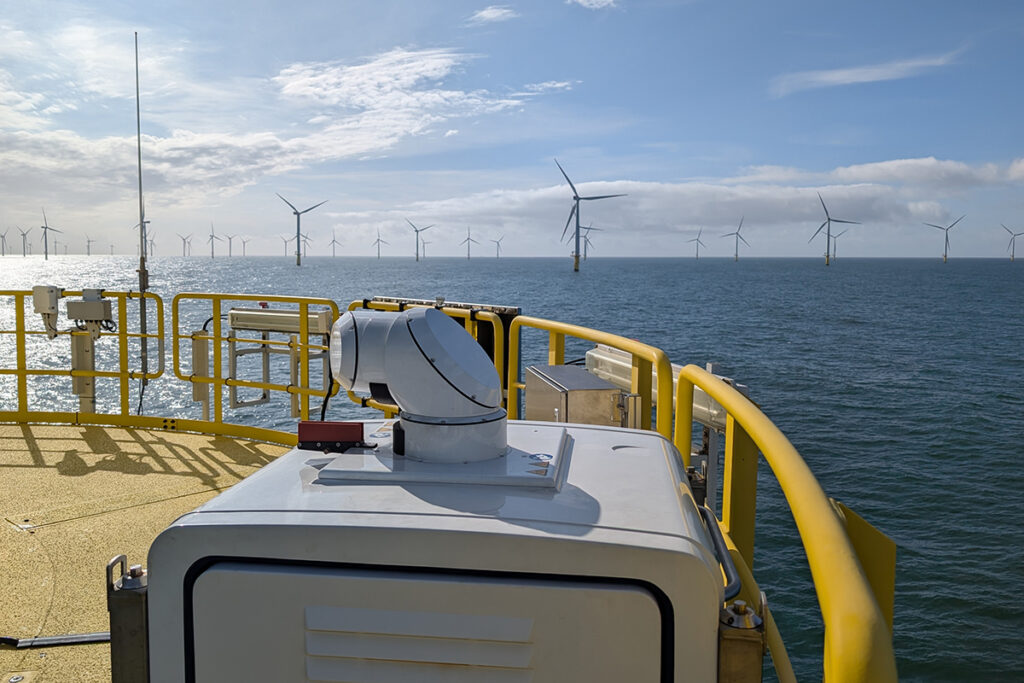
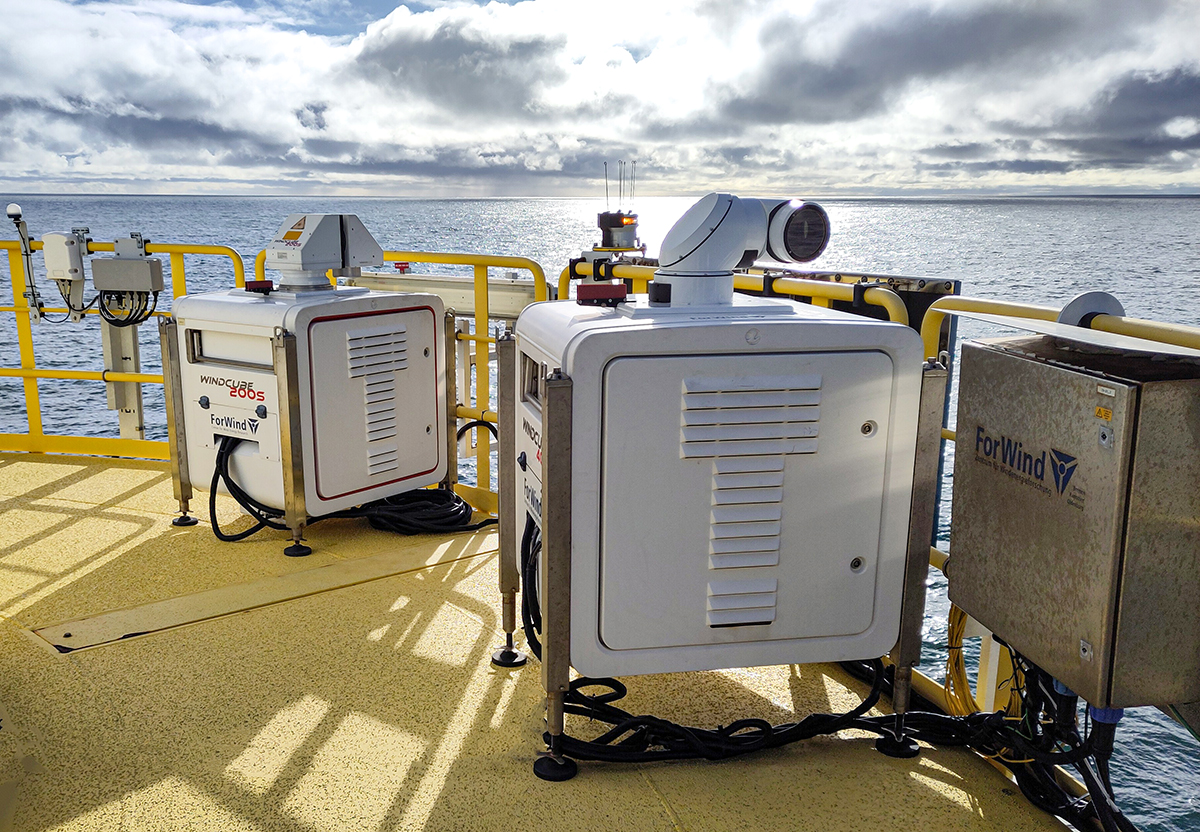
At several locations in the Trident wind farm cluster (consisting of the Amrumbank, Kaskasi and Nordsee Ost wind farms) north of Heligoland, ForWind (University of Oldenburg) has installed numerous lidar devices on wind turbines and platforms together with the wind farm operator RWE. Lidar works in a similar way to radar, but with laser light: the devices emit laser pulses and use the reflection of particles in the air to measure how fast and where the wind is blowing – without contact, over distances ranging from a few hundred meters to many kilometers.
The living lab uses long-range scanning lidars that scan the wind field in large sectors. They make visible how the wind flows into the wind farm, how it is slowed down by the turbines and how wakes of individual turbines and entire wind farms extend over longer distances. With the help of short-range lidar systems, which are mounted on the nacelles behind the rotor and look upstream into the wind, the incoming wind is measured directly in front of the rotor. The system thus “sees” the wind that actually hits the rotor – in contrast to conventional wind measurements, which only record the wind behind the rotor. A latest-generation lidar device completes the ensemble and measures profiles of the wind conditions at different heights.
Sensors on the turbines: feeling the pulse of the turbine
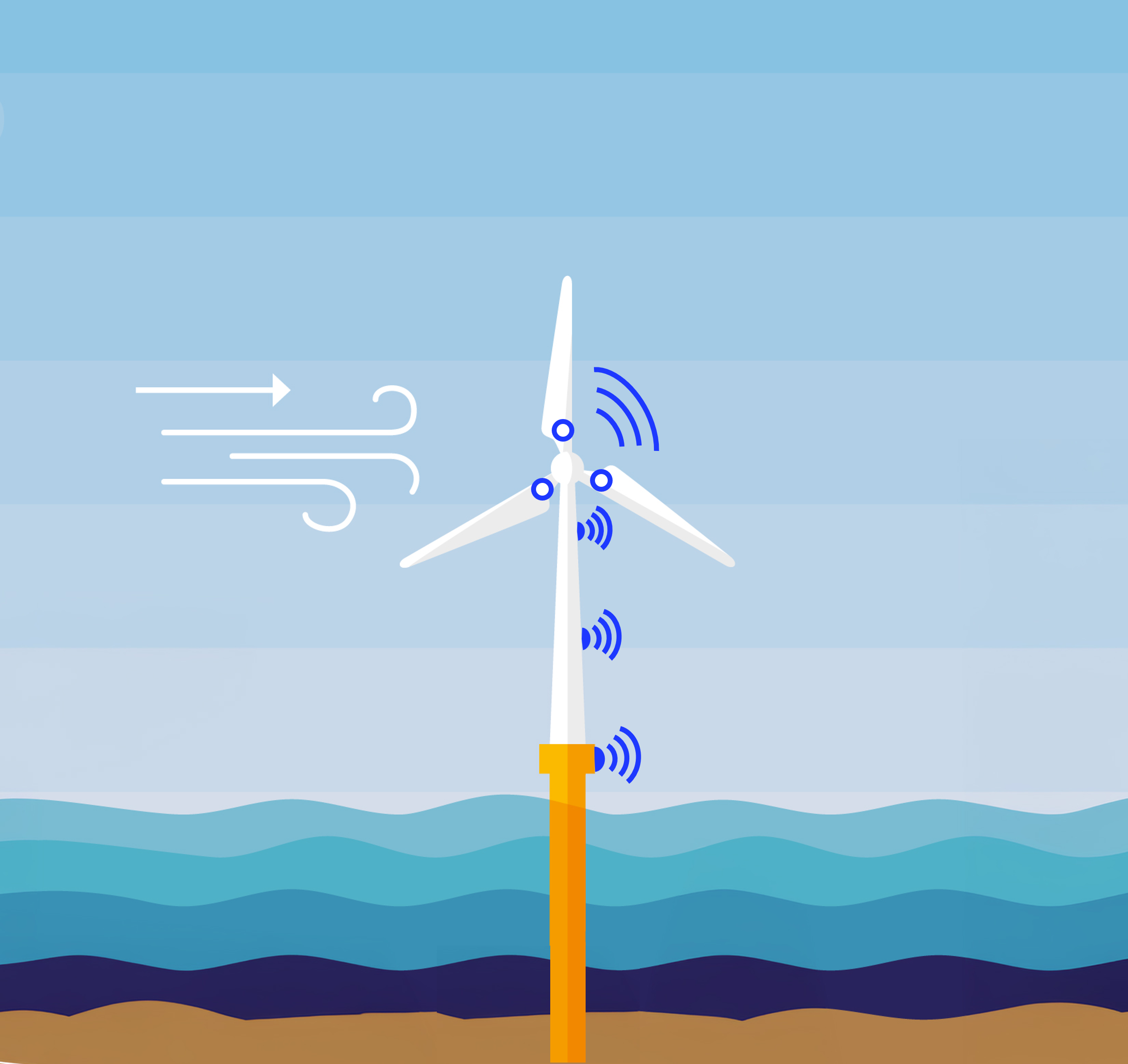
One of the wind turbines in the wind farm under investigation was equipped with additional measurement technology as a reference turbine. At several positions along the tower and the rotor blade, acceleration sensors measure how strongly the structure vibrates in response to wind and wave loads. Strain gauges simultaneously record how the material is stretched and compressed under the changing loads. From this, the actual mechanical loads and the fatigue of the material over time can be calculated.
This measurement data forms the basis for the development of methods with which the researchers at the Institute of Statics and Dynamics (ISD) at Leibniz Universität Hannover can estimate the stress distribution in the load-bearing structure based on acceleration measurements at a small number of measurement positions. This is particularly important for long-term structural monitoring because instrumentation is not possible at all locations and sensor maintenance is challenging.
In the future, the findings from the well-instrumented turbine are to be transferred to the other turbines in the park via transfer learning – thereby reducing the demands on the instrumentation of the other turbines. In the long term, these methods will support the continuous assessment of fatigue life under changing structural conditions.
With these measurements and evaluations, the Living Lab contributes to a better understanding of how long wind turbines can be operated safely and how operation and maintenance can be improved. A continuous service life estimate based on the load actually measured can help to answer these questions.
Measurement data as the basis for research in the Living Lab
The lidar devices measure the wind that hits the turbines. The sensors on the turbine measure what this wind triggers on the structure. Together with the operating data of the systems, a complete picture of the wind, the system reaction and material fatigue can be derived.
If you add the ship and flight campaigns, the circle is complete: the aircraft measures the atmosphere, the lidars measure the wind field in the park, the turbine sensors measure the structural load, and the ship and boats measure the processes in the water. From the free atmosphere to the rotor to the seabed – a continuous measurement chain that has never been seen before.
This database makes it possible to address questions that are central to the work in the various areas of innovation in the living lab: How do wake effects spread between entire wind farm clusters, and what does this mean for future layouts? How much stress is actually placed on turbines during operation – and can it be deduced from this whether they can continue to be operated safely beyond their design life? How will wind farms change the currents, sediment transport and underwater noise pollution if the expansion to 70 GW goes ahead? How can minute-by-minute power forecasts be used for grid stability? And how can the dual use of offshore areas be realized in a value-adding way – for example, offshore wind combined with aquaculture or hydrogen production?
All these questions can only be answered by a combination of modeling, simulations and data-driven methods, the results of which can only be validated using extensive measurement data.